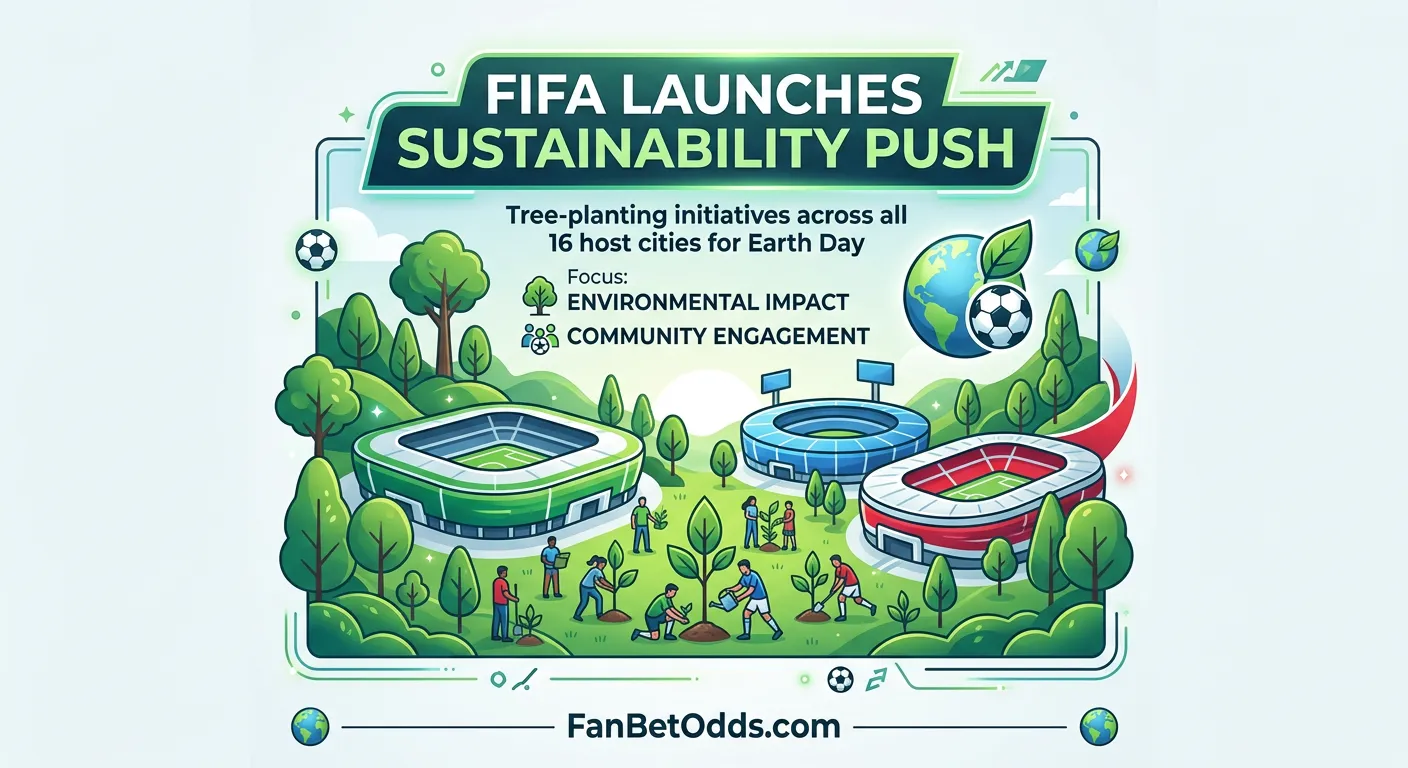

FIFA marked Earth Day on April 22 by announcing a coordinated environmental initiative across all 16 cities hosting matches at the 2026 World Cup. The programme involves community tree-planting events, urban greening projects, and educational partnerships with local schools and organisations across the USA, Canada and Mexico.
The initiative is part of FIFA's broader 2026 sustainability framework, which includes a target of reducing the tournament's per-spectator carbon footprint by 30% compared to 2022 through partnerships with venue operators on renewable energy, a carbon offset programme tied to official merchandise sales, and logistics commitments covering team transportation and stadium operations.
This World Cup is structurally distinct in sustainability terms: its unprecedented scale - 104 matches across three countries - creates a significantly larger logistical footprint than previous editions. FIFA's communication positioning frames the environmental programme as evidence that scale and sustainability can coexist, ahead of what is expected to be the most commercially significant sporting event in history.
Key Context
The sustainability angle has no direct betting market implications but is a significant indicator of the cultural and commercial architecture around this tournament - a World Cup that FIFA is framing as a generational legacy event, with all the marketing scale and global-audience activation that implies.