
Coaches rarely reveal their hand willingly before a tournament, but their rotation decisions in pre-tournament friendlies follow patterns that informed bettors can decode. The strategic use of friendly matches has evolved significantly - top managers treat each fixture as a controlled experiment within a larger preparation protocol, and player selection choices are directional signals even when they appear random.
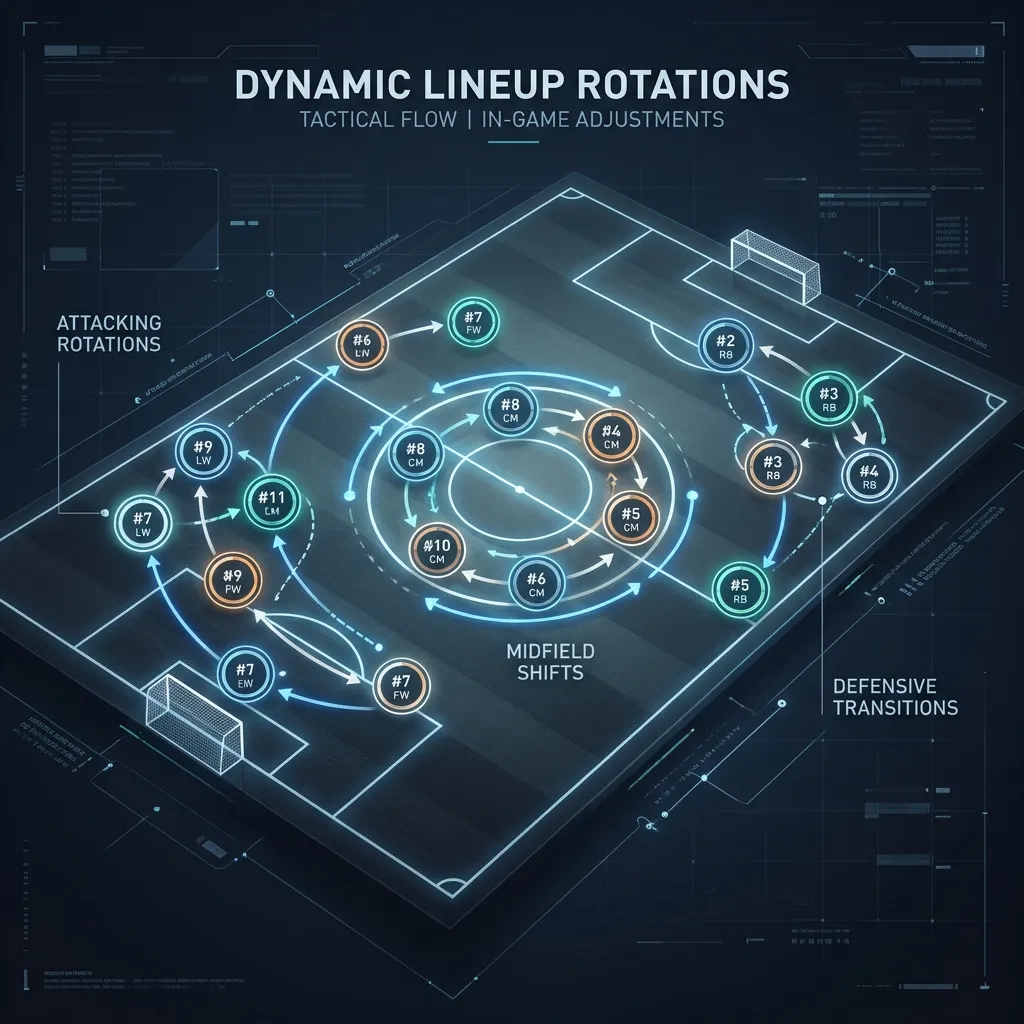
The 'Mirror Experiment' - playing mirror-image halves of a friendly with different personnel groups while maintaining the same formation and structural instructions - is the clearest? signal of a manager's tactical personality. When a coach rotates his entire first XI for the second half but keeps the system identical, he is declaring that the system is primary and individuals are secondary. Spain and Japan are the clearesta examples: both have run systematic mirror experiments confirming their World Cup tactical identity is built around reproducible structure rather than a specific player group.
Super-sub identification is one of the highest-value outputs from friendly analysis. When a player consistently enters at 60-75 minutes in multiple friendlies - regardless of the score - and consistently generates attacking statistics during their time on the pitch, the coach is signalling their role in competitive games. Picking these confirmed substitute scorers in 'Anytime Goalscorer' markets at longer odds than confirmed starters often provides the best risk-adjusted return in individual player betting.
Key Context
'Value traps' from rotated squads are one of the most consistent errors casual bettors make. If a team fields a heavily rotated lineup in a friendly against a weak opponent and loses, the reflection in subsequent match odds is almost never justified - the result came from a controlled experiment, not a genuine competitive assessment. Denmark is the clearest? recent example: friendly losses with second-string lineups remain entirely uncorrelated with their first-choice competitive performance.
The most reliable rotation-reading tool combines two data points: which players the manager consistently fields together in the same lineup - signalling the likely first-choice XI - and which combinations he consistently avoids. When two specific attackers never appear together in any pre-tournament fixture, the coach is likely signalling a competition for one starting role. Building tournament goalscorer positions around confirmed starting signals is significantly more reliable than relying on historical averages alone.