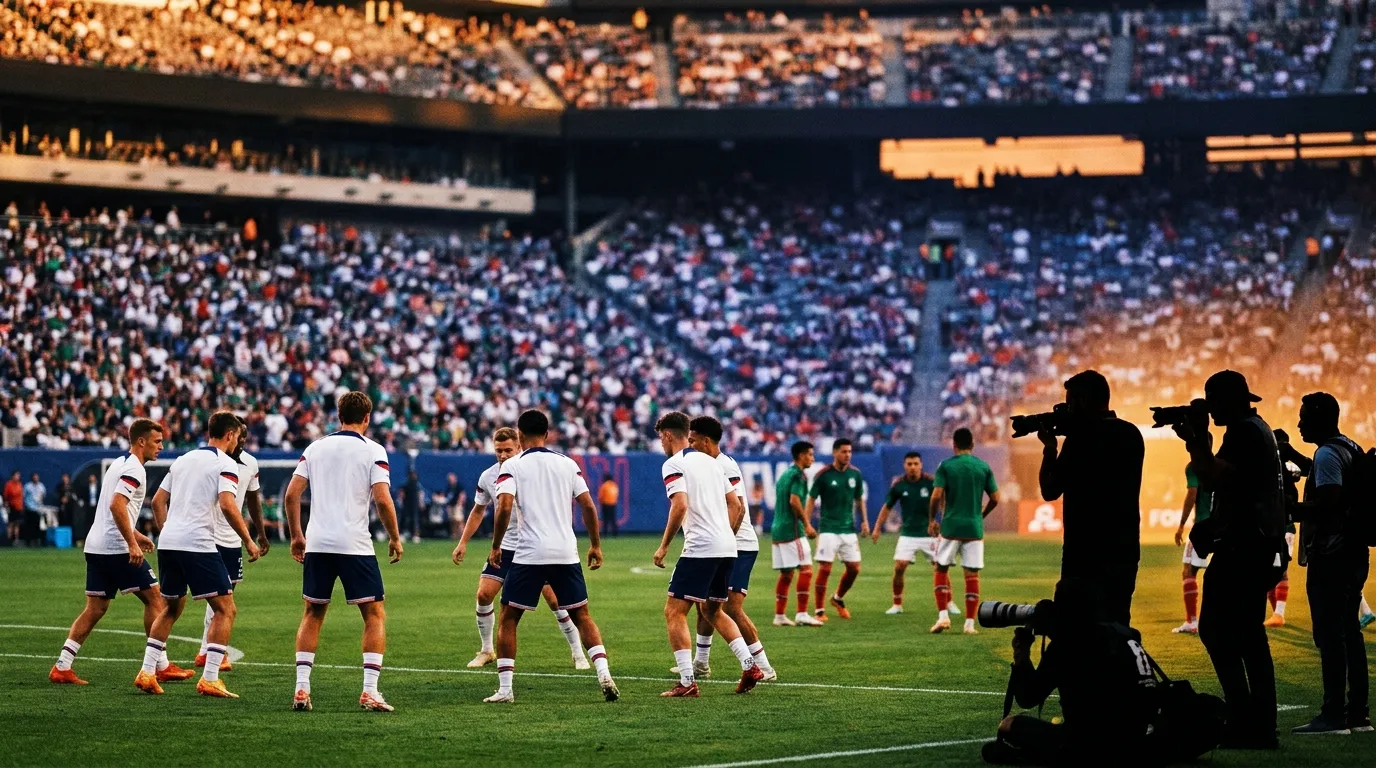

FIFA has officially announced the 16 host cities for the 2026 World Cup spread across the United States, Mexico and Canada. The announcement marks a pivotal milestone for the first 48-team World Cup, with venues selected on strict criteria including stadium capacity, transport infrastructure and long-term legacy potential. The USA leads with 11 host cities including New York, Los Angeles, Dallas, San Francisco, Seattle, Atlanta, Miami, Kansas City, Philadelphia, Boston and Houston.
Mexico contributes three iconic venues - the legendary Estadio Azteca in Mexico City, Guadalajara's Estadio Akron, and Estadio BBVA in Monterrey - while Canada hosts matches in Toronto and Vancouver. Estadio Azteca will host the tournament opener on June 11, cementing its status as the most storied stadium in World Cup history. MetLife Stadium in New Jersey is confirmed as the Final venue on July 19.
For outright betting markets, host city allocation now provides concrete data on which nations could benefit from extended home-crowd support. USA, Mexico and Canada all carry host-nation advantages for specific fixtures, and bookmakers including Bet365 and DraftKings have already moved the United States outright price marginally in response to confirmation of crowd-dense home fixtures. Mexico's placement in Azteca for early-round games could similarly boost their group-stage markets.
Key Context
The altitude factor becomes statistically relevant with Azteca (2,240m above sea level) and Akron in Guadalajara (1,566m) confirmed as match venues. Historical data shows games at altitude venues average 0.4?0.6 fewer goals than sea-level fixtures. Under 2.5 goals markets for altitude-hosted games will likely be mispriced at tournament open, creating value for informed bettors.
Stadium selection also confirms which knockout-phase venues carry weight for specific finals scenarios. The two semi-finals are allocated to AT&T Stadium in Dallas and Mercedes-Benz Stadium in Atlanta. Travel distance between potential opponent home bases and venue locations could introduce fatigue variables worth factoring into Asian handicap markets for the knockout rounds.